
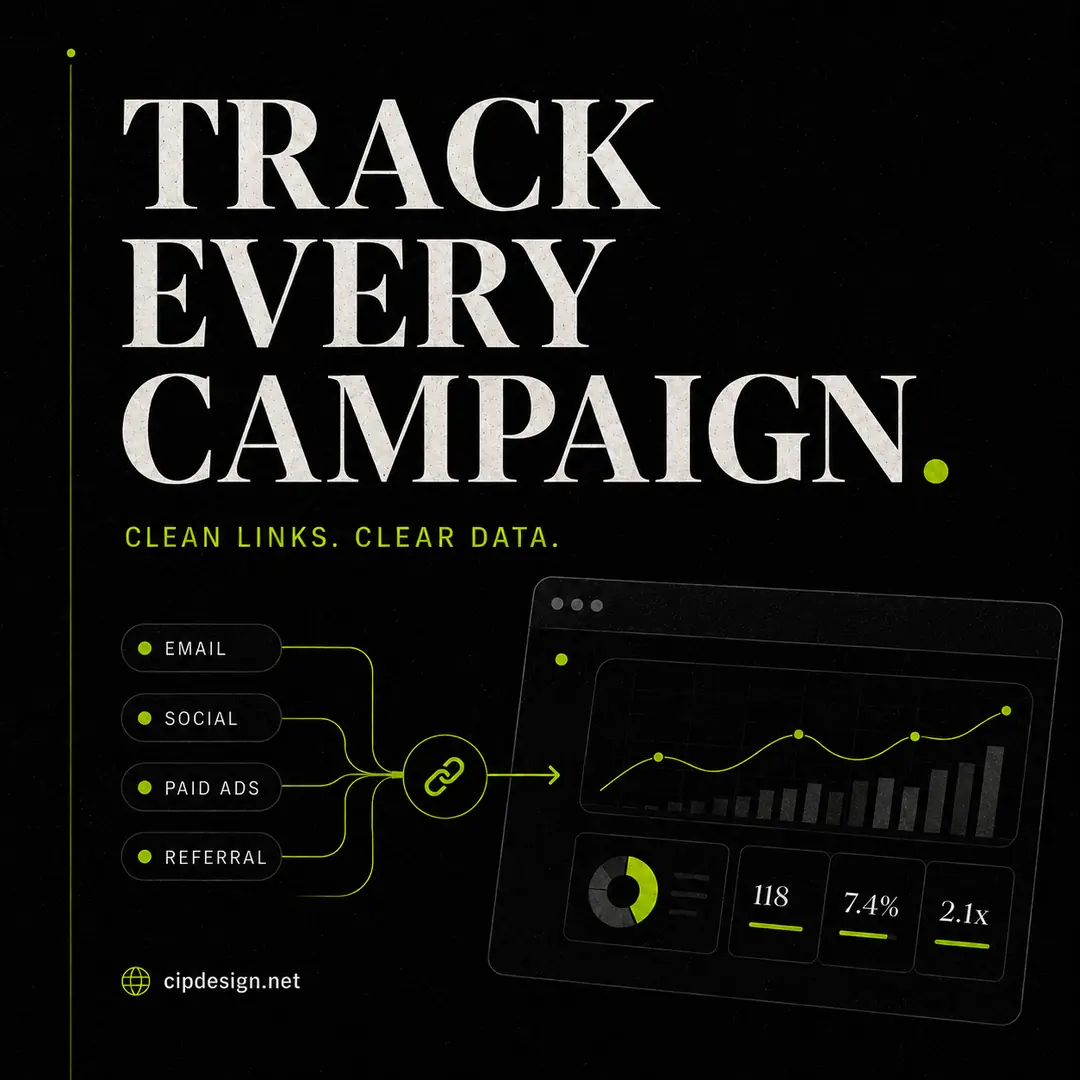
A campaign can generate visits without showing where they came from. Someone clicks a link in an email signature, QR code, social post or PDF, and analytics records an unhelpful source. UTM parameters add consistent labels to the destination URL so campaign traffic can be grouped and compared.
What are UTM parameters?
UTM parameters are name-value pairs added after a URL. They do not change the page itself; they describe the campaign context to an analytics platform.
- utm_source: where the visitor came from, such as facebook or newsletter.
- utm_medium: the channel type, such as social, email, cpc or qr.
- utm_campaign: the shared campaign name.
- utm_content: an optional distinction between creatives or placements.
- utm_term: an optional keyword or audience label, commonly associated with paid search.
The free UTM link builder creates the complete URL and includes useful presets for social, advertising, email and print.
Consistency matters more than clever naming
Analytics treats Facebook, facebook and fb as different values. Decide on lowercase names, separators and channel labels before a campaign starts. Keep a simple shared convention so everyone produces compatible links.
A practical pattern is:
- source: platform or publication
- medium: stable channel category
- campaign: year, initiative and market
- content: creative or placement variant
For example, two Instagram story designs can share the source, medium and campaign while using different content values. This makes the creative comparison possible without fragmenting the whole campaign.
When should you use UTM links?
Use them in email campaigns, organic social posts, influencer links, partner placements, downloadable PDFs, QR codes and offline material. Paid platforms may add their own tracking automatically, but consistent UTMs can still help cross-platform reporting.
Avoid adding UTMs to internal links within your own website. Doing so can overwrite the visitor’s original acquisition information and create misleading sessions.
Keep URLs readable and safe
Do not place confidential information, personal names or sensitive audience details in UTM values. Parameters are visible in the browser, may be copied and can appear in analytics, referrer data or shared screenshots.
For printed material and QR codes, consider using a controlled short redirect that points to the tagged destination. This produces a cleaner visual and lets you correct the target later, provided the redirect remains under your control.
Test before publishing
- Open the final link in a private window.
- Confirm that the correct page loads.
- Check that existing query parameters are preserved.
- Verify the campaign appears in your analytics setup.
- Save the approved link beside the creative.
Campaign tracking is useful only when the landing page performs well. Before spending money or sending a large email, check the destination with the website audit tool and preview its search metadata with the SERP preview.